
What is Family Enmeshment? How to Recognize Unhealthy Family Dynamics and Set Boundaries
We all want to feel close to our families. But what happens when “closeness” becomes control, guilt, or a loss of individuality?
This is where family enmeshment often comes into play—an often misunderstood dynamic that can feel loving on the surface, but leaves little room for autonomy, emotional boundaries, or self-trust.
In this post, we’ll explore what family enmeshment really is, how to recognize signs of unhealthy family dynamics, and how to begin the work of breaking free from enmeshment with compassion and clarity.
If your family feels too close — like everyone’s emotions, decisions, and problems are tangled together — you might be experiencing enmeshment. For a bigger picture of how therapy can help shift these patterns, check out this guide to navigating family dynamics in adult family therapy.
What is Family Enmeshment?
Family enmeshment occurs when personal boundaries are blurred or nonexistent—when individual identities are secondary to the emotional needs or expectations of the family system.
In enmeshed families, roles are often rigid, and emotional interdependence runs deep. For example:
- You might feel responsible for a parent’s mood or well-being.
- Speaking up for yourself may feel like betrayal.
- Your decisions are shaped by how others will feel—rather than what’s best for you.
Enmeshment isn’t always intentional or malicious. It often stems from trauma, cultural expectations, or generations of learned behavior. But over time, it can lead to anxiety, guilt, difficulty making decisions, or a sense that your life isn’t fully your own.
One of the first steps in addressing enmeshment is learning how to create connection without over-involvement. This guide to setting healthy family boundaries walks you through how to do it.
Enmeshment vs. Healthy Closeness
It’s important to note: being close with your family isn’t a bad thing. Healthy closeness involves love, support, and emotional connection—but also respect for each person’s individuality.
Here’s a quick comparison:
| Healthy Closeness | Family Enmeshment |
| Encourages autonomy and personal growth | Prioritizes loyalty and sameness over individuality |
| Respects emotional and physical boundaries | Guilt or pressure for setting boundaries |
| Open communication with room for disagreement | Conflict is avoided, suppressed, or punished |
| Each person is responsible for their own emotions | You’re expected to manage others’ emotions |
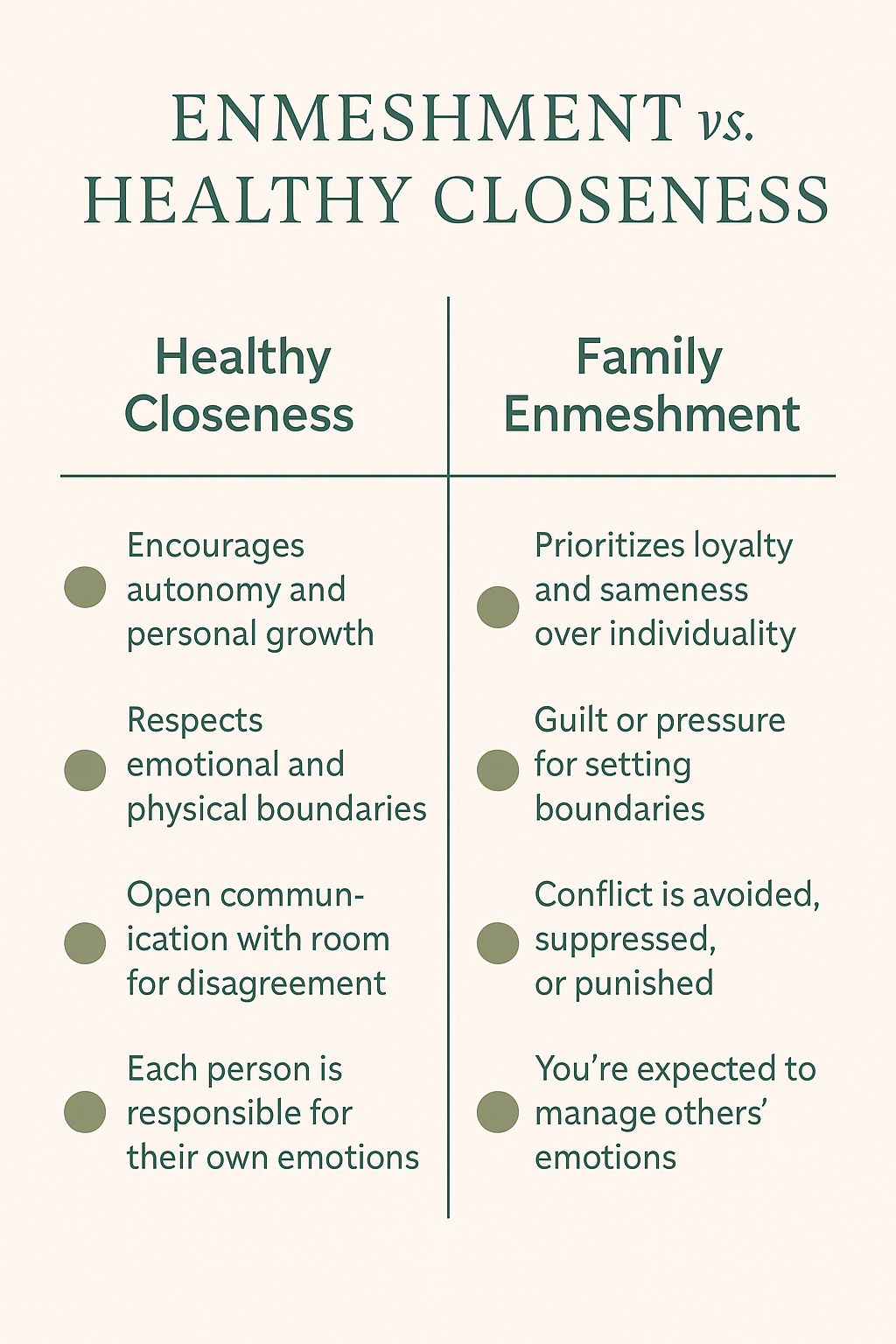
If your family’s love often comes with strings attached—or if you’ve been taught that putting yourself first is selfish—you may be experiencing enmeshment.
Creating space doesn’t always have to mean going completely no-contact. Here’s how to navigate family estrangement when you need distance without cutting ties entirely.
Signs of Enmeshment in Adult Family Systems
Many people don’t realize they grew up in an enmeshed family until adulthood. Some signs include:
- Difficulty saying “no” without guilt
- Feeling overly responsible for family members’ emotions
- Struggling to make independent choices
- Fear of disappointing or upsetting others
- Lack of privacy or emotional space
- Being labeled the “selfish” or “difficult” one when asserting needs
Enmeshment often starts as a survival strategy passed down through generations. This article on breaking the cycle of generational trauma explains how these patterns form — and how to change them.
Breaking Free from Enmeshment: How to Set Healthy Boundaries
Healing from enmeshment is not about cutting ties—it’s about redefining your role in the family system and honoring your own emotional space.
Here are some steps to begin:
- Name what’s happening
The first step is simply recognizing the pattern. Understanding enmeshment can bring immense clarity and relief—it’s not that you’re “too sensitive” or “too distant,” it’s that your boundaries were never honored. - Reconnect with your own needs
What do you want? What feels aligned for you—separate from guilt, expectation, or family pressure? - Start small with boundaries
Boundaries don’t have to be harsh or dramatic. It can start with saying, “I’m not available to talk about that right now,” or choosing not to share every detail of your personal life. - Expect resistance—but stay grounded
Families used to enmeshment may resist change. That doesn’t mean you’re doing something wrong. Hold your boundaries with love and consistency. - Get support
Working with a therapist familiar with family enmeshment and unhealthy family dynamics can offer space to untangle your emotional landscape and build self-trust.
One of the first steps in addressing enmeshment is learning how to create connection without over-involvement. This guide to setting healthy family boundaries walks you through how to do it.
You Deserve to Be Your Own Person
Healing from enmeshment isn’t about rejecting your family—it’s about reclaiming yourself. You are allowed to have boundaries, preferences, and a life that reflects your values.
If you’re starting to recognize patterns of enmeshment and want help navigating the path forward, I’m here to support you.
Ready to Explore Family Therapy?
I offer individual and family therapy for those navigating family trauma, enmeshment, and boundary work. Reach out here to schedule a consultation.
Related Reads

